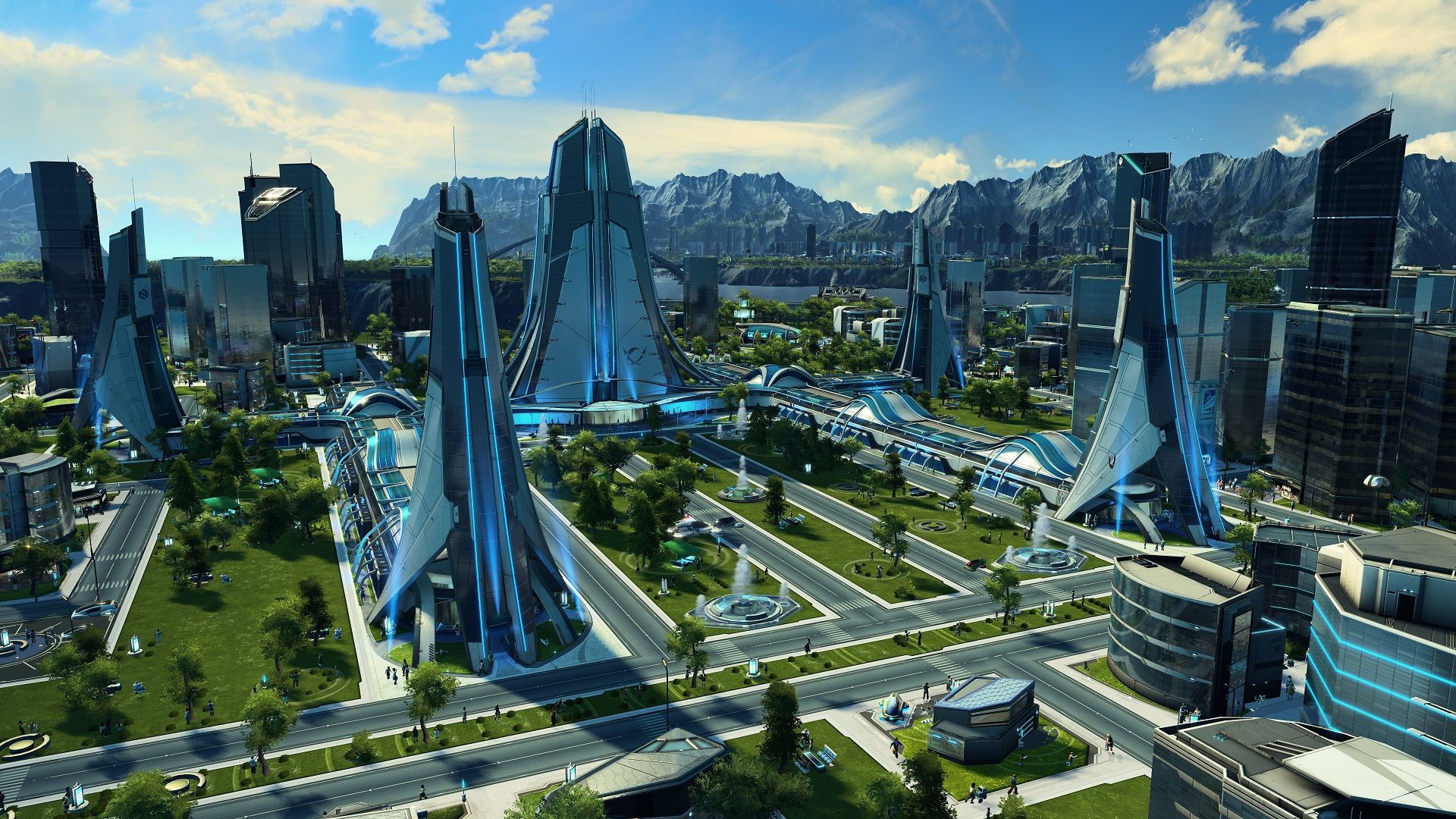
Most city building games demand a purchase, steep system requirements, or lock core features behind paywalls. But high-quality, genuinely free city building games for PC do exist—if you know where to look. These aren’t trial versions or shallow mobile ports. They’re full-featured, mechanically deep, and designed to deliver satisfying urban development experiences without costing a cent.
This isn’t a list of broken early-access demos or ad-riddled clones. We’ve tested, played, and vetted every entry below for gameplay depth, performance, and actual availability. If you're craving creative control over a growing metropolis without opening your wallet, these are the games worth your time.
What Makes a Free City Building Game Worth Playing?
Not all “free” games are created equal. Many use misleading marketing—calling themselves “free” while hiding pay-to-win mechanics, crippled progression, or intrusive ads. A truly worthwhile free city builder must meet certain standards:
- No forced payments to unlock essential mechanics.
- Playable without internet (where possible).
- Meaningful progression and city customization.
- Regular updates or an active modding community.
- Low to moderate system requirements—accessible on most modern PCs.
Free doesn’t have to mean low quality. Some of the most innovative city building mechanics come from indie developers releasing games for free to build a following or test ideas. The best ones offer depth rivaling paid titles like Cities: Skylines—just with fewer polish-heavy visuals or massive scale.
Top 7 Free City Building Games for PC
Below are the most polished, engaging, and actually free city building games you can download and play today. Each offers unique mechanics, strong community support, or standout design choices worth exploring.
1. Cities: Skylines – Free Modding & Asset Scene Wait—Cities: Skylines isn’t free. But its massive library of free mods and assets transforms it into a long-term free experience if you already own it via sale or bundle. While the base game isn’t free-to-play, it’s frequently discounted and often included in Humble Bundles or Epic Store giveaways.
More importantly, once acquired, you gain access to thousands of free custom maps, buildings, and gameplay overhauls on the Steam Workshop. For example: - Realistic Population 2: Adjusts residential density and job ratios for more lifelike simulation. - Network Multitool: Streamlines road and transit placement. - 81 Tiles 2: Unlocks the entire map for unrestricted expansion.
You won’t get the base game free—but if you’ve ever picked it up during a sale, you’re sitting on a goldmine of free city-building content.
Best for: Players who want near-infinite customization and realism.
System Requirements: - OS: Windows 7/8.1/10 64-bit - CPU: Intel Core i5-3470 / AMD FX-6300 - RAM: 6 GB - GPU: nVidia GTX 660 / AMD Radeon HD 7870
2. TheoTown Originally a mobile title, TheoTown is a pixel-art city builder now fully available on PC as a free download. Inspired by SimCity 2000, it emphasizes charm, accessibility, and a gentle learning curve. Despite its lightweight visuals, it delivers surprisingly deep mechanics—including traffic AI, pollution modeling, and a robust plugin system.
/cities-skylines-5a0ef1eabeba3300375673ba.png)
The PC version is free with optional cosmetic donations. No ads. No paywalls. Full offline play.
Key Features: - Zone and build a city with residential, commercial, and industrial areas. - Manage budgets, taxes, and public services. - Download community-made plugins for new buildings, vehicles, and scenarios. - Active forum with regular updates from the solo developer.
Limitation: Not built for massive cities. Performance degrades after ~50k population.
Best for: Casual players and fans of retro-style urban sims.
Download: theotown.com
3. Seven Cities An ambitious open-source city builder built using the Godot engine. Seven Cities is still in active development but already playable. It aims to blend tile-based terrain editing, resource logistics, and population needs into a cohesive simulation.
Unlike most free games, it’s built from the ground up with mod support and an open codebase. You can study how the simulation works, tweak files, or contribute to development via GitHub.
What’s playable now: - Terrain sculpting and road placement. - Residential and commercial zoning. - Basic service buildings (fire, police, health). - Day/night cycle and dynamic weather.
It’s rough around the edges—but if you enjoy tinkering and want to see the future of free city builders, this is a strong contender.
Best for: Tech-savvy players and aspiring game designers.
Download: GitHub - Seven Cities
4. City Game Studio Not a traditional city builder—but one of the most creative spins on the genre. You don’t build a physical city. Instead, you run a video game studio that develops city builders. It’s a meta-management sim where your "city" is the studio itself.
Unlock new programming modules, hire employees, manage finances, and release games across decades of tech evolution. As your company grows, you add features like traffic AI, pollution, and 3D graphics to your fictional city sim.
Despite its niche premise, it’s deeply strategic. You balance R&D, marketing, and team morale while reacting to player feedback and market trends.
Why it’s relevant: It teaches the design of city building games—perfect for aspiring developers or fans curious about how these sims are made.
Free version: Includes full first era (1980s–90s). Paid DLC unlocks later decades.
Best for: Gamers who love simulation depth and meta storytelling.
Download: Steam - Free Version
5. Influence – A City Building Sandbox A lesser-known gem with modular construction and survival elements. Influence tasks you with building a city in a hostile environment where resources are scarce and social dynamics impact stability.
Unlike traditional grid-based zoners, Influence uses a freeform build system—place individual houses, farms, and workshops where you choose. Citizens have names, jobs, relationships, and needs that evolve over time.
The free version includes the full early-access prototype, with survival and base-building mechanics fully implemented.
Notable Mechanics: - Individual AI-driven citizens. - Crime, disease, and rebellion systems. - Day-night cycles and seasonal changes.
Best for: Players who want a more intimate, story-driven take on city building.
Download: Available via itch.io (free demo).
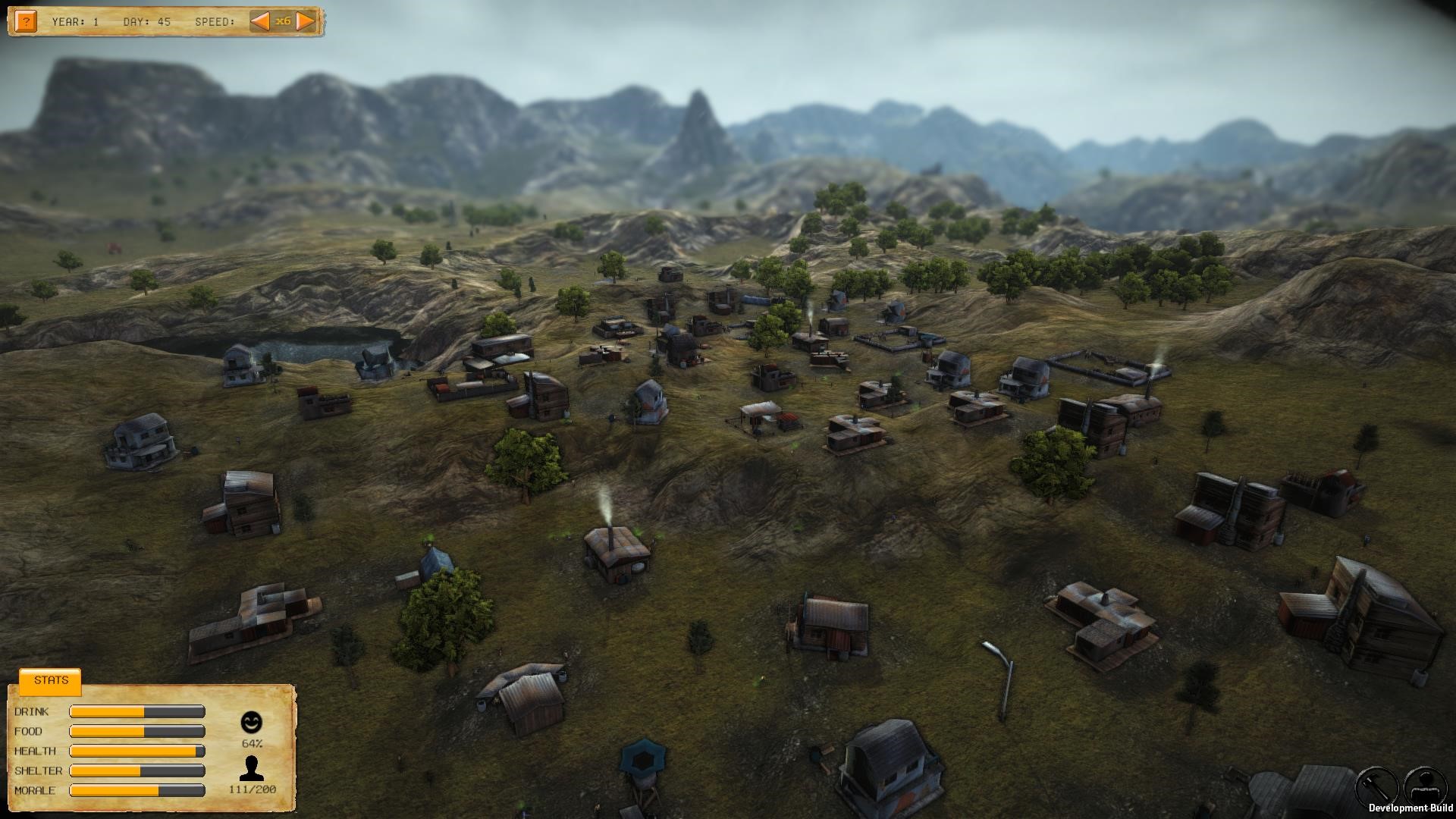
6. Ministry of Simulation: Fuel & Power A spin-off from the Cities: Skylines modding scene, this standalone game focuses on energy infrastructure. You don’t build entire cities—instead, you design and manage large-scale power grids, oil pipelines, and fuel distribution networks.
It’s a niche but fascinating take: your city is hidden, and you only see the logistical web that keeps it alive. Can you prevent blackouts? Optimize refinery output? Survive natural disasters?
The free version includes three scenarios and full mod support.
Best for: Engineering-minded players and infrastructure geeks.
Download: ministryofsim.com
7. Simmer A quirky, narrative-driven city builder where you design restaurants instead of cities. But hear us out—Simmer takes the same core mechanics—zoning, foot traffic, service placement, efficiency—and applies them to restaurant layouts.
You start with a food truck and grow into a chain. Each level is a puzzle: where to place the grill, how many waiters to hire, how to route customers.
It’s free on itch.io, ad-free, and surprisingly addictive. While not a literal city builder, it scratches the same strategic itch.
Best for: Players who enjoy spatial optimization and micro-management.
How to Avoid Fake “Free” City Builders
The search for “city building games pc free download” is littered with traps. Here’s how to spot the fakes:
- Download sites with fake buttons: Red flags include flashing “Download Now” buttons that lead to ad farms or malware.
- Games requiring endless surveys: If you have to complete five offers to “unlock” the game, it’s not free.
- Mobile ports with IAP overload: Many Android games on PC emulators are unusable without constant purchases.
- Abandoned projects: Check last update date. If a game hasn’t been touched in 3+ years, it’s likely broken on modern systems.
Stick to official sources: Steam, itch.io, GitHub, or developer websites.
Realistic Expectations for Free City Builders
Free games come with trade-offs: - Smaller scale: Fewer citizens, less terrain. - Limited graphics: Often 2D or low-poly 3D. - Slower updates: Many are solo or volunteer-driven. - No multiplayer: Co-op or shared cities are rare.
But they also offer something paid games often lack: freedom to experiment. With no financial risk, you can try bold designs, fail fast, and learn quickly.
Getting Started: Your First Free City
New to city building? Here’s a quick workflow:
- Pick a game from the list above—start with TheoTown or Seven Cities.
- Begin with a small map—focus on balancing residential, water, and power.
- Don’t over-expand. Traffic and service coverage collapse quickly in early cities.
- Save often. Free games may lack stability.
- Join the community. Reddit, Discord, or forums often have custom content and troubleshooting tips.
Final Thoughts: Value Over Price
The best free city building games aren’t just cheap alternatives—they’re proof that creativity and passion can thrive without a price tag. From TheoTown’s nostalgic polish to Seven Cities’ open-source ambition, these games offer real depth, replayability, and satisfaction.
None will replace Cities: Skylines for scale or SimCity for legacy appeal. But they’ll keep you building, thinking, and engaged—without asking for a dime.
Download one today. Start small. Build something memorable.